
Grain Is Proof That the Hand Was There
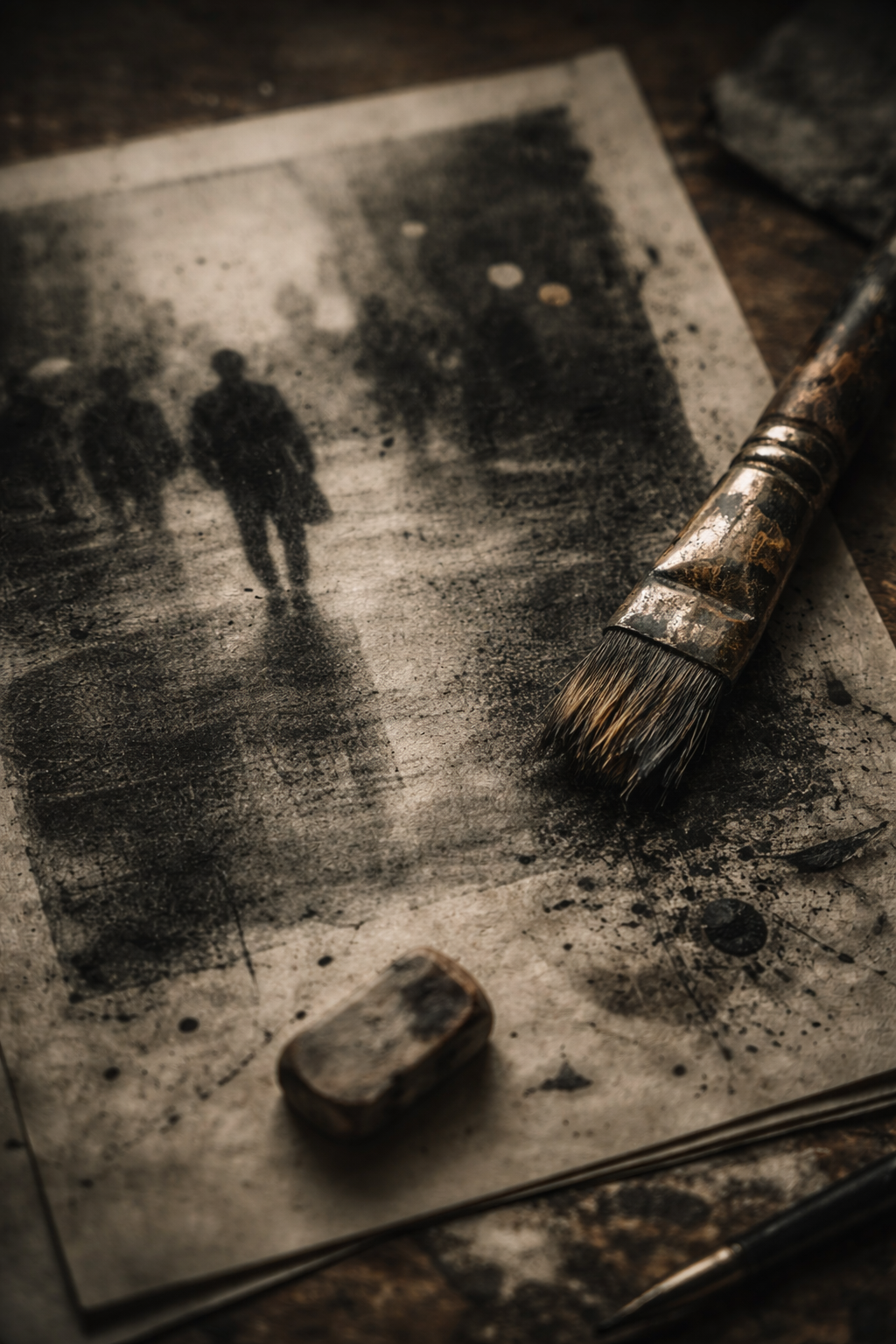
Perfection is easy.
Remove the texture. Smooth the edges. Correct the mistake.
But perfection erases evidence.
Grain is resistance. It’s paper pushing back. Ink refusing to behave. Light hitting dust on a lens. These aren’t flaws—they’re witnesses. They prove that a human body was involved.
I choose materials that fight me. Cheap paper that buckles. Ink that bleeds when I hesitate. Brushes that show their age. I want the process to argue with me because that argument leaves marks.
When everything behaves, nothing is learned.
Grain slows the viewer down. It asks the eye to linger. To notice where pressure changed. Where the hand paused. Where the artist made a decision and didn’t correct it afterward.
That’s where honesty lives—not in the image, but in the hesitation inside it.
Digital tools can be beautiful. I use them. But they’re servants, not leaders. They help preserve, not replace, the physical struggle that gives the work its weight.
If you can’t see the grain, you’re looking too fast.
And if you’re making work without friction, ask yourself who it’s really for.
